
Effective capacity planning for small business owners is often the difference between a brand that scales and a founder who burns out. In the early days of entrepreneurship, capacity planning for small business success usually looks like saying “yes” to every inquiry that lands in your inbox, but sustainable growth requires a shift toward capacity planning for small business sustainability. When you transition from a “more is better” mindset to a “capacity-first” strategy, you stop viewing your time as an infinite resource and start treating it as the most precious asset your business possesses.
If you’ve ever felt that sharp, familiar pang of guilt when an inquiry drops in, the one that whispers you should take it, even though your calendar is already screaming, you aren’t alone. We’ve been conditioned to believe that for ambitious women, every opportunity is a gift we aren’t allowed to return. But here is the truth: a business built on guilt is a business built on sand. It might look impressive from the outside, but the foundations are constantly shifting under the weight of “shoulds.”
Does This Make My Business Lighter or Heavier?
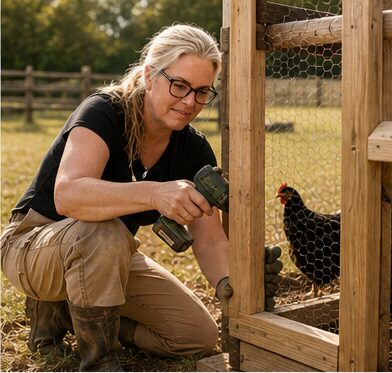
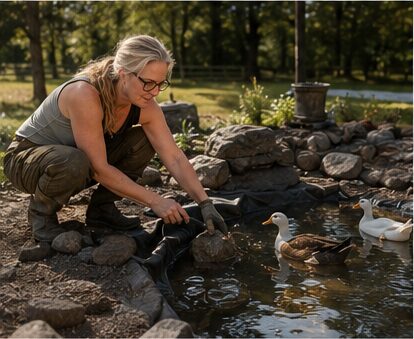
Lately, I’ve been spending a lot of time outside. If you follow me on social, you’ve probably seen the mud on my boots and the rather unimpressed look on my horse’s face as I try to “help” rearrange the paddock. Last week, I spent a good four hours with a drill in hand, fixing up the chicken run and preparing a new area for the ducks.
I wasn’t “working” in the traditional sense. My phone was in the kitchen. My inbox was definitely not being refreshed every thirty seconds. And yet, the business was moving. The blogs were being read, the social posts were landing, and the systems were humming along.
This wasn’t a happy accident. It was the result of a very intentional shift in how I make decisions. I started filtering every single opportunity, every new project, every partnership, every “quick coffee” request, through one simple question:
“Does this make my business lighter or heavier?”
When we make decisions based on guilt, we almost always choose “heavy.” We say yes because we don’t want to disappoint a peer, or because we’re afraid the well will run dry if we don’t grab every bucket of water offered. But “heavy” has a cost. It’s the hidden weight that slows down your response times, muddies your creative thinking, and eventually makes you resent the very business you built for freedom.
The Hidden Cost of the “Always Yes” Culture
We often talk about the financial opportunity of a new client, but we rarely talk about the operational cost. Capacity planning for small business owners isn’t just about whether you have the hours; it’s about whether you have the emotional bandwidth.
Every new project carries a weight that isn’t listed on the invoice:
- The mental load of “switching gears” between different client needs.
- The space in your brain reserved for problem-solving at 3:00 am.
- The administrative trail of emails, invoices, and follow-ups.
When you are constantly stretching your capacity to the limit, your client experience suffers. You move from being a proactive partner to a reactive fire-fighter. Protecting your capacity isn’t about being “lazy” or “unambitious.” It’s a strategic business decision that allows you to provide a premium service to the people you do say yes to.
Sustainable business growth isn’t about doing everything; it’s about doing the right things with enough room to actually enjoy the process.
Why “Not Now” is a Power Move
In the world of business balance, saying “not now” is often more powerful than saying “yes.”
Imagine your business as a field. If you keep adding horses without checking the grass or the fences, eventually, the ground becomes a muddy mess, the fences break, and the horses get stressed. Capacity planning for small business owners is about knowing exactly how many “horses” your field can sustain before the quality of life (and the quality of the grass) starts to decline.
When you have clear systems in place, what I like to call your “silent salesperson”, you create a buffer. This buffer allows you to pause. It allows you to look at a shiny new opportunity and say, “That looks incredible, but my field is currently full. Let’s talk in three months.”
This isn’t a missed opportunity. It’s a protection of your brand’s integrity. It tells the world (and yourself) that your time is valuable and your capacity is finite.
Capacity-First Design: The Connection Scout
One of the areas where we often leak the most capacity is in relationship building. We know that lead generation and nurturing connections are the lifeblood of our businesses. But trying to remember every conversation, every follow-up, and every “we should collaborate” moment is an enormous mental drain.
This is exactly why we created Connection Scout.
It’s an example of capacity-first business design. Instead of relying on your already-overloaded memory to manage your professional relationships, you have a system that does the heavy lifting for you. It organises your follow-ups and keeps your network warm, acting as a “calm” support system rather than another “to-do” that leaves you feeling guilty.
By automating the logistics of relationship building, you free up the mental capacity to actually show up and be present in those conversations. You aren’t distracted by the “when did I last email them?” panic. You’re just… there. Present. Light.
Protecting Your Ability to Choose
The lesson I learned while fixing that chicken coop wasn’t about DIY skills (though I’m getting better with a drill). It was about the freedom of choice.
Good systems don’t just save you time; they create the capacity for you to choose how you spend that time. Because my AI content creation was already scheduled and my lead systems were working behind the scenes, I didn’t have to choose between “marketing my business” and “being present on my farm.” I could do both.
The business wasn’t heavy. It was working for me, not the other way around.
When you start prioritising capacity planning for small business longevity, you stop being a servant to your inbox. You start making decisions from a place of abundance rather than a place of “if I don’t do this now, it’s all going to disappear.”

As you look at your calendar for the coming weeks, I want to invite you to take a deep breath and look at your commitments with fresh eyes. Not through the lens of what you “should” do, or what you’re “allowed” to say no to, but through the lens of capacity.
Ask yourself: What decisions have I been making from guilt instead of capacity?
Remember, you didn’t build this business to be tethered to a screen until your eyes blur. You built it for freedom. Protecting your capacity is the only way to ensure that freedom actually exists.
Does this make your business lighter or heavier? The answer to that question will tell you everything you need to know.