
If you’ve been wondering why your conversations aren’t turning into clients, it’s likely not because you need more leads. In most cases, why your conversations aren’t turning into clients comes down to confidence, structure, and how the conversation is being held. When you understand why your conversations aren’t turning into clients, you can shift from awkward or stalled conversations into natural, effective client relationships.
Why Conversations Aren’t Turning Into Clients
It’s the 11:00 AM slump. You’ve just finished a discovery call, or perhaps you’ve been back-and-forth in the DMs for three days with a promising prospect. You felt like you were vibing. You shared the links. You even threw in an extra tip about their website header. And then… crickets. Silence. The digital equivalent of a tumbleweed rolling through your inbox.
Most of us immediately jump to the conclusion that we need more “top of funnel” activity. We think we need 500 more followers or a fresh batch of cold leads to throw into the engine. But here’s the truth: it’s rarely a lead problem. It’s almost always a conversation problem.
Think of it like trying to lead a 1700kg horse into a trailer. You can have the most beautiful, powerful horse in the world (that’s your business), but if you’re pulling on the rope with shaky hands and zero direction, that horse is going to plant its hooves and stay exactly where it is, probably while eyeing a patch of grass with more interest than your offer.
There is often a massive misalignment between your intention and your delivery. You intend to be helpful, supportive, and professional. But your delivery might be coming across as hesitant, overly-explanatory, or just plain confusing. When your energy says “I’m not quite sure if I should be asking for money right now,” the potential client feels it. They don’t see a solution; they see a question mark. And nobody hires a question mark.
The Most Common Mistakes in Business Conversations
We’ve all been there. I’ve been there, usually while trying to type a “professional” response while my toddler is negotiating for a third “emergency” snack and the cat is looking at me with deep, soul-piercing suspicion. In those moments, we fall into the trap of overthinking.
The biggest conversation killer? Overthinking the response. You spend forty-five minutes drafting a three-sentence reply. You delete, you re-type, you add an emoji, you take the emoji out because it feels “too much,” and then you put it back in because you don’t want to seem “cold.” By the time you hit send, the natural rhythm of the human connection is dead. It’s been replaced by a stiff, over-polished corporate mask.
Then there’s the Script Trap. We’ve been told we need a “proven framework” or a “closing script.” But when you follow a script, you stop listening. You’re just waiting for your turn to speak so you can drop “Step 4: The Pivot.” It feels clunky. It feels like a bad high school play where everyone has forgotten their lines.
And let’s talk about the Fear of “Selling.” If you’re avoiding direct questions because you don’t want to seem “pushy,” you’re actually doing your prospect a disservice. If you know you can help them, but you’re too afraid to ask, “Would you like to get started on this together?” you’re leaving them stuck in their problem. Avoiding the direct question isn’t polite; it’s a lack of leadership.

Why Traditional Sales Advice Doesn’t Work Here
The traditional “Bro-Marketing” sales advice, the kind that involves “crushing objections” and “creating false scarcity”, is enough to make any heart-centered business owner want to hide under a weighted blanket for a week. These scripted frameworks feel unnatural because they are unnatural. They’re built on dominance, not connection.
For women-led businesses, communication is often about empathy, nuance, and building a bridge. When we try to jam our feet into the stiff, uncomfortable shoes of traditional sales tactics, we end up walking with a limp. We hesitate. We pause. We lose our natural authority because we’re trying to play a character that isn’t us.
This creates hesitation instead of clarity. Your prospect isn’t looking for a “closer”; they’re looking for a guide. They want someone who can look at their messy, chaotic business systems and say, “I see where the leak is, and I can help you fix it.” If you’re busy trying to remember if you should use the “Alternative Choice Close” or the “Ben Franklin Balance Sheet,” you aren’t being a guide. You’re being a salesperson. And frankly, we’re all a bit tired of being sold to.

What a Natural Client Conversation Actually Looks Like
A natural, high-converting conversation feels less like a pitch and more like a quiet cup of coffee on a Sunday morning. It’s the difference between performing and listening.
When you’re performing, you’re focused on yourself. How do I look? Do I sound smart? Did I mention my ROI?
When you’re listening, you’re focused entirely on them. You’re looking for the gaps. You’re noticing the way their voice drops when they talk about their current lead-gen process. You’re hearing the things they aren’t saying.
A natural conversation is about responding vs. controlling. You don’t need to drive the conversation toward a pre-determined destination like a getaway driver in a heist movie. You let it evolve. You ask a question, you listen to the answer, and you let that answer dictate the next step.

It’s okay if the conversation takes a detour. Maybe they need to vent about their power cut for five minutes. Maybe they need to explain why their current CRM makes them want to throw their laptop out the window. By allowing that space, you build the one thing a script can never create: Trust.
How to Move Conversations Forward Without Pressure
So, how do we move things along without feeling like we’re shoving someone toward a cliff? It starts with asking better questions. Instead of “Do you want to buy this?”, try “Based on what we’ve talked about, does this feel like the right next step for you?”
Leading gently is an art form. It’s about recognising readiness signals. If a prospect is asking about your onboarding process or how long a project takes, they’ve already mentally bought in. You don’t need to “sell” them anymore; you just need to hand them the map.
If you find that the “sourcing” part of the conversation is what’s draining you, trying to find the right people to talk to in the first place, this is where automation can be your best friend. Our Connection Scout™ service is a focused AI assistant for LinkedIn lead generation that removes manual searching and guesswork so you can focus on building relationships. A bit less digital needle-in-a-haystack, a bit more calm, clean connection.
When you have a steady stream of the right people to talk to, the pressure to “convert or die” on every single call disappears. You can breathe. You can be picky. You can be yourself.

The Missing Piece Most Business Owners Overlook
The final, and perhaps most important, piece of the puzzle is Confidence in Conversation. Not the “I’m the best in the world” kind of ego, but a deep, quiet confidence that you know your craft and you know your value.
It requires emotional awareness. It’s about being present in the moment rather than being three steps ahead in your head. When you show up with presence over persuasion, people feel it. It’s grounding. It’s magnetic.
If you’re still feeling that “icky” feeling every time you have to talk about your prices or your packages, it’s time to rewrite the internal narrative. You aren’t “taking” money from people; you are exchanging your immense value for their investment in their own future.
Stop looking for the perfect words and start looking for the perfect connection. When you lead with heart and support the process with calm, automated systems, the “sales” part takes care of itself.
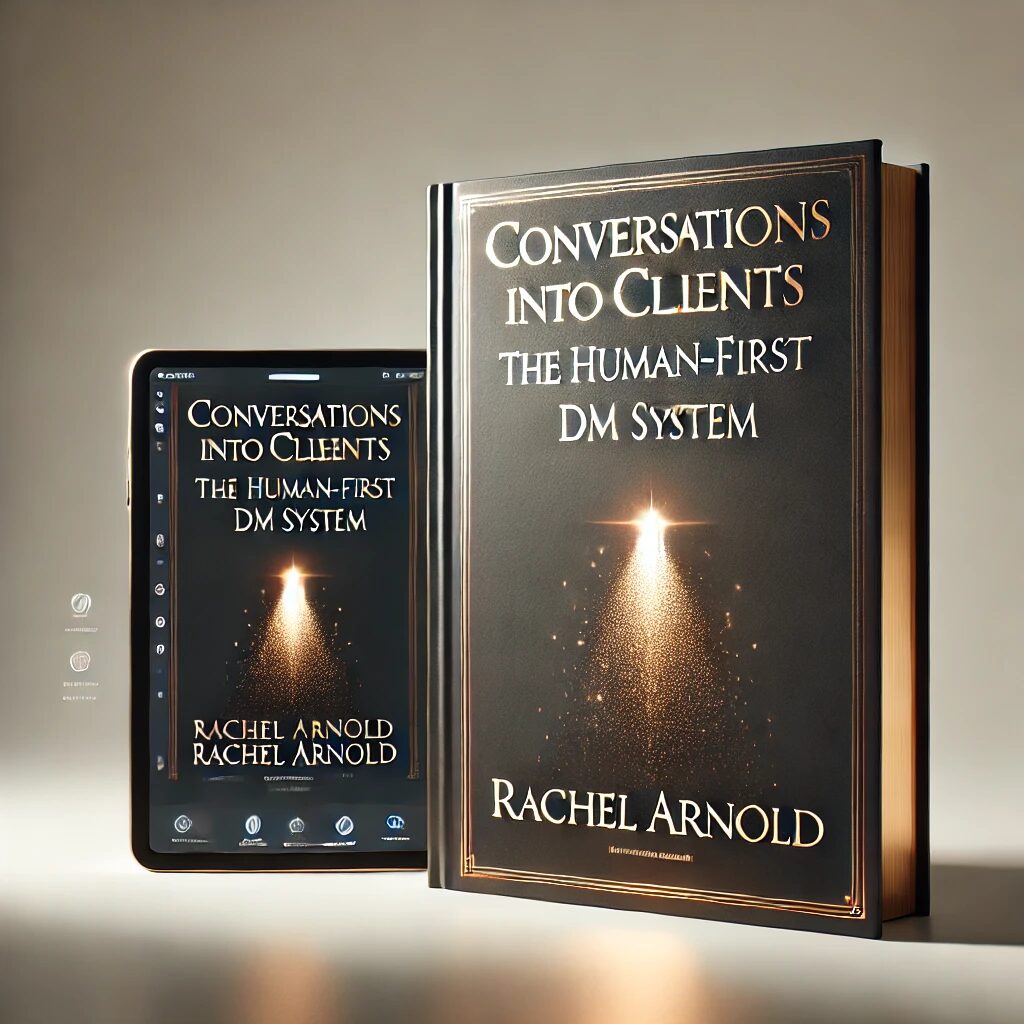
Ready to stop the “guessing game” and start turning those “maybe” chats into “yes please” clients? Grab our Conversations into Clients eBook. It’s a practical, no-fluff guide to turning conversations into clients without forced scripts, acting as a reliable bridge between visibility and revenue. Basically, less awkward script-reading robot, more confident human with a working plan.
You’ve got this. Now, go have a real conversation. (And maybe give that horse a carrot while you’re at it.)