If you’re feeling completely wiped out by 3 PM, it’s rarely because you haven’t done enough; it’s because you’ve decided too much. Dealing with decision fatigue in women entrepreneurs is the invisible weight that drags on every single goal you set. When we talk about decision fatigue in women entrepreneurs, we aren’t just talking about choosing a brand color or a software provider; we’re talking about the thousand micro-judgments made before the first cup of coffee is even cold. Understanding that decision fatigue in women entrepreneurs is an operational crisis, not a personal failure, is the first step toward building a calm system that actually supports your life. It’s not that you’re lazy, it’s that your operational ecosystem is leaking energy through a thousand tiny holes.
What Decision Fatigue Actually Looks Like
We often think of “big decisions” as the things that drain us. Signing a lease, hiring a team member, or pivoting a brand. But in reality, it’s the “mental tabs” that never close. It’s the cognitive fragmentation that occurs when you are forced to switch roles every seventeen minutes.
Imagine it’s 8:07 AM. You are currently:
- A CEO checking a lead notification.
- A Logistics Manager wondering if the dog’s flea treatment arrived.
- A Head of Catering negotiating why a green grape is “wrong” compared to a red one.
- A Beekeeper (if you’re like Rachel) suddenly getting a swarm call and having to decide if you have enough frames ready or if you’re going to be chasing twenty thousand bees across a hedge in twenty minutes.
Every one of these requires a decision. “Should I answer that email now?” “Where did I put the hive tool?” “Do we have enough milk?” By the time you sit down at your laptop at 9:30 AM, your “decision budget” for the day is already half-spent. You haven’t even started your “actual” work yet, but your brain feels like a browser with 47 tabs open, three of them are playing music, and you can’t find the mute button.

Why Women Experience Higher Operational Load
There is a specific, heavy brand of operational load that women tend to carry. It’s the “remembering.” It’s the mental tracking of the entire household and business ecosystem. It’s the decision to buy sweetcorn plants at the garden centre that somehow turns into a full small-holding style haul because you “might as well” get the tomato feed, the extra mulch, and three more types of herbs since you’re already there.
We don’t just manage tasks; we manage dependencies. If we don’t decide what’s for dinner by 10 AM, the chicken won’t defrost, which means we’ll have to decide on a takeaway at 6 PM, which means we’ll have to decide who is driving to pick it up.
This invisible administration, the “remembering” of birthdays, school trips, and when the horse needs its hooves trimmed, creates a baseline of cognitive noise. When you add a business on top of that, you aren’t just adding a job; you’re adding an entirely new set of gears to an already spinning machine. If those gears aren’t automated, your brain has to manually turn every single one. No wonder you’re tired.
How Decision Fatigue Affects Visibility
This is where it gets sneaky. You know you “should” be visible. You know you “should” post that video or send that newsletter. But visibility requires creativity, and creativity requires a surplus of mental energy.
When you are suffering from decision fatigue in women entrepreneurs, visibility becomes the first thing to go. Why? Because it feels like “one more thing to decide.”
- “What should I talk about?” (Decision)
- “Which photo should I use?” (Decision)
- “Is this caption too long?” (Decision)
- “Should I post this at 10 AM or 4 PM?” (Decision)
So, you procrastinate. Not because you’re scared of the camera (well, maybe a little), but because your brain literally cannot handle making five more choices. You retreat into “busy work”: the stuff that feels productive but doesn’t require high-level thinking: like color-coding your digital files for the fourth time this month or scrolling through font options.
This avoidance isn’t a lack of discipline. It’s a protection mechanism. Your nervous system is trying to save you from blowing a fuse.

The Role Of AI In Reducing Mental Clutter
This is exactly why we talk about AI Alchemy and calm systems. The goal isn’t just to “get more done”: it’s to make fewer decisions.
Imagine if your content wasn’t a daily “what do I say?” panic, but a repeatable workflow. Imagine if your lead generation wasn’t a series of awkward “how do I reply to this DM?” moments, but a structured path.
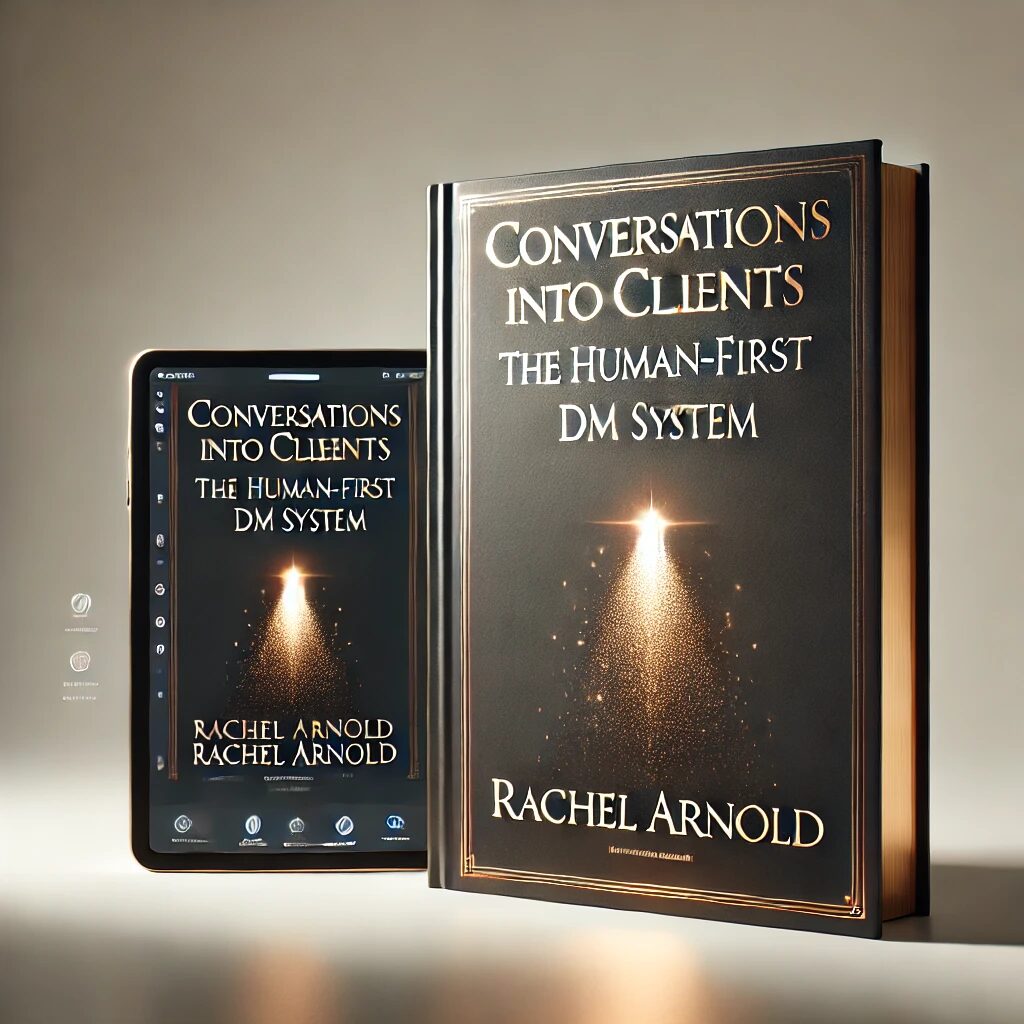
This is where something like Conversations Into Clients changes the game. Instead of staring at a blank screen and deciding how to be “human yet professional” for the thousandth time, you have a system. You have templates that don’t sound like robots. You have a workflow that handles the “invisible” bits of the conversation so you can just show up and be you.
AI can take over the “administrative thinking.” It can draft your emails, organize your messy voice notes into a coherent blog post, and remind you of the follow-ups you’d otherwise forget. By offloading these micro-decisions to a system, you reclaim that mental space for the big stuff: like actually enjoying your garden or finally catching that swarm of bees.
Sustainable Businesses Reduce Cognitive Pressure
A business should be a support structure, not a source of constant “decision-panic.” If your business feels like a toddler constantly tugging at your sleeve asking for a snack, your systems are broken.
Building a sustainable, calm business means protecting your attention and energy as if they were your most valuable assets: because they are. It’s about creating “calmer workflows” where the path of least resistance is actually the one that moves the needle.
When you reduce the cognitive pressure, something magical happens. You start to have room for living again. You can go to the garden centre and actually enjoy the smell of the damp earth without checking your phone to see if a client is “waiting” for a decision. You can deal with a four-hour power cut without feeling like your entire world is collapsing because your systems are robust enough to wait for you.
We need to stop praising “the hustle” and start praising the system that allows us to go outside and plant sweetcorn. Visibility shouldn’t be a performance; it should be an overflow of a well-managed life.
If you’ve ever felt like you’re drowning in choices, know this: You aren’t failing at being a founder. You’re just carrying too much of the operational load manually. It’s time to put down the manual gears and let the automation do the heavy lifting.
Ready to stop deciding and start doing? Contact us to see how we can help you close those mental tabs for good.