Human connection in business matters more than ever, especially as AI and automation become increasingly common. While automation can reduce operational pressure, human connection in business is still what builds trust, relationships, and long-term client loyalty. This article explores what should stay human in your business : and what can be supported more calmly behind the scenes.
The Pressure to Automate Everything
If you’ve spent more than five minutes on LinkedIn or Instagram lately, you’ve likely been hit with the “automate everything” gospel. The messaging is everywhere: remove yourself completely, build a fully passive empire, and let robots run the show while you sip margaritas on a beach. It sounds incredibly appealing, doesn’t it? Especially when you’re staring at a mountain of unread emails and a to-do list that seems to be breeding in the dark.
But for many women in business, this narrative feels… off. There’s a quiet disconnect. We didn’t start our businesses just to become a ghost in the machine. When you remove the person, you often remove the soul. Efficiency without connection can make a business feel emotionally flat. It becomes a transaction rather than a relationship. If your business feels like a cold, automated vending machine, you might find that while the gears are turning, the joy: and the clients: start to slip away.
Automation Is Meant to Support You, Not Replace You
We need to reframe how we look at AI and automation. It isn’t a replacement for your brain, your heart, or your specific brand of magic. Instead, think of it as a very high-functioning stable hand. It’s there to muck out the stalls, fetch the water, and make sure the gear is clean so that when you show up to ride, you can actually focus on the horse.
The purpose of AI is to reduce operational pressure. It’s about removing those repetitive, soul-sucking tasks that drain your battery before 10:00 am. When you use automation correctly, you aren’t removing the human from the business; you’re protecting the human. You’re ensuring that when you finally sit down to talk to a client or create something new, you aren’t already running on fumes.
What Should Stay Human in Business
There are parts of your business that simply cannot: and should not: be outsourced to an algorithm. These are the core human elements that build real, lasting value.
- Client Conversations: The nuance of a real-time chat, the ability to hear what someone isn’t saying, and the warmth of a genuine response.
- Emotional Intelligence: Understanding the fear, excitement, or hesitation behind a client’s request.
- Instinct and Judgment: That “gut feeling” that tells you a project isn’t the right fit, even if the numbers look good on paper.
- Nuanced Communication: The ability to pivot a conversation based on a subtle shift in tone.
- Trust Building: Real trust is earned through consistent, empathetic human interaction.
These are the things your clients actually remember. They don’t remember how quickly your automated calendar sent a confirmation (though that’s nice); they remember how it felt to be understood by you. People buy from people they feel understood by.

The Difference Between Operational Work and Human Work
To build a business that feels both efficient and deeply human, you have to know where to draw the line. I like to split tasks into two buckets: Operational and Human.
Operational Work (The “Robot” Bucket):
This is the logistical heavy lifting. Scheduling, basic organisation, lead sourcing, data entry, and repetitive workflows. This is the “admin” that keeps the lights on but doesn’t require your specific emotional frequency. If it’s a process that looks the same every single time, it’s operational.
Human Work (The “Soul” Bucket):
This is where you shine. Guidance, empathy, high-level strategy, deep understanding, and relationship-building. This is the work that requires your presence, your experience, and your heart.
Automation works best when it supports the relationship, not replaces it. It clears the administrative clutter so the human work has room to breathe.
Why Women in Business Often Burn Out
The reason so many of us feel like we’re vibrating at a frequency of “Pure Exhaustion” is that we’re trying to occupy both buckets at once. We’re carrying every single role personally. We’re trying to remain fully present for our clients while simultaneously manually tracking 47 different leads, managing the school run, and wondering if we remembered to take the chicken out of the freezer for dinner.
There is a massive amount of invisible pressure in trying to do it all manually. It’s the constant mental switching: the “tab-hopping” in your brain. You feel guilty delegating because you think you “should” be able to handle it, or you fear that automation will make you look “lazy” or “fake.”
The truth? Burnout often comes from carrying operational work that doesn’t actually require you. It’s not the client work that breaks us; it’s the 400 micro-tasks surrounding the client work.

Calm Systems Create More Space for Human Connection
When we talk about “Calm Systems” at AI Alchemy, we aren’t talking about building a fortress of robots to hide behind. We’re talking about creating a quiet, reliable engine that runs in the background so you can actually show up.
Systems reduce the mental clutter. When the lead sourcing is happening while you’re at your kid’s sports day, or your basic onboarding is handled automatically, you gain something precious: breathing room.
I’ve found that when my business is “doing its thing” quietly in the background, I have more energy for real conversations. I can be more present. Visibility becomes calmer because I’m not posting out of a place of panicked necessity: I’m posting because I actually have something I want to share. Good systems create more presence, not less.
What AI Should Actually Be Doing
If you’re wondering where to start, look for the friction. AI should be used to reduce friction, not remove your personality. Here are a few ways AI can support you without making you sound like a chatbot:
- Organising: Let it sort your notes, categorise your ideas, or keep your project management tool tidy.
- Drafting: Use it to get past the “blank page” syndrome. Let it give you a rough skeleton that you then flesh out with your own voice and stories.
- Sorting and Filtering: Let it identify potential leads or highlight important emails so you don’t spend three hours in your inbox.
- Consistency: Use it to help repurpose your best ideas so you aren’t reinventing the wheel every Tuesday at 2:00 pm.
AI is the tool, but you are the craftsman. It can hold the wood steady, but you’re the one deciding what you’re building.
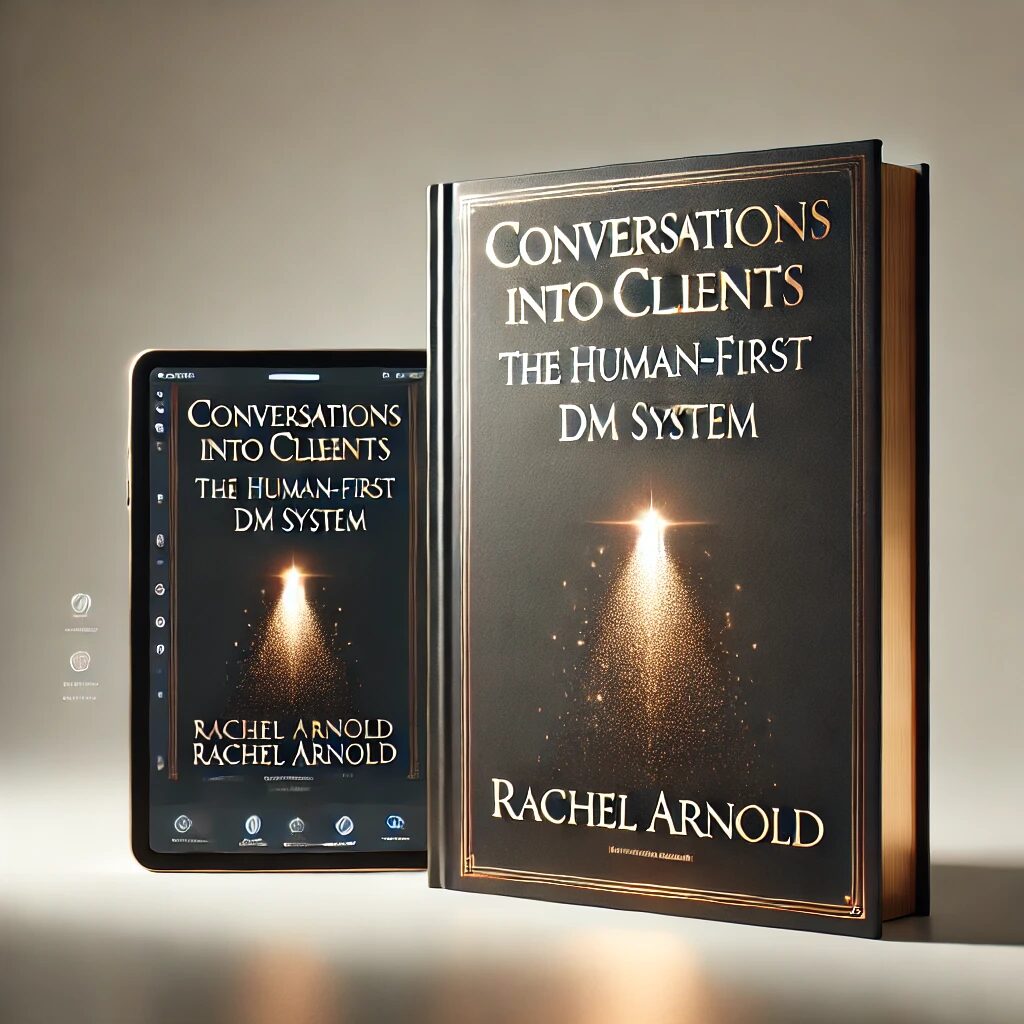
🔗 THE CONVERSATIONS TO CLIENTS GUIDE
If you’re currently showing up online but struggling to turn those conversations into real client relationships, the Conversations to Clients guide walks through how to build trust and connection in a way that still feels human. It’s about the bridge between “being seen” and “being hired,” without losing your soul in the process.
Explore the Guide in the Alchemy Vault
Sustainable Businesses Need Both Systems and Humanity
We aren’t anti-AI. Far from it. We’re pro-human.
A sustainable business: one that doesn’t leave you feeling like a wrung-out sponge by Friday afternoon: requires a delicate balance. It needs the cold, hard efficiency of systems to protect the warm, soft heart of the human.
When your business is supported correctly, it feels lighter. You stop worrying about whether the “system” is working because you can see it working. This gives you the emotional safety to take risks, to be vulnerable in your marketing, and to actually enjoy the relationships you’re building. The future of business isn’t emotionless automation; it’s supported humans doing their best work.

In Conclusion
At the end of the day, your clients aren’t looking for a perfect, automated experience. They’re looking for a solution to their problems and a person they can trust.
Automation should create space. Human connection remains the core of why we do what we do. Visibility feels better when it’s supported by a structure that doesn’t require your constant, manual intervention. Calm systems protect your energy, your time, and: most importantly: your relationships.
You don’t have to choose between being “high-tech” and “high-touch.” You just have to let the tech do the heavy lifting so you can stay human.
If you want to learn how to build calm, genuine client conversations that actually lead somewhere, the Conversations to Clients guide is linked below. It’s designed to help you navigate the digital space without losing that personal touch.
Get the Conversations to Clients Guide here
And if you’re ready for support consistently finding aligned people to have those conversations with, Connection Scout is now opening its next round of clients. Let us handle the lead sourcing so you can focus on the connection.