
What should you automate in your business, and what should stay human? This is one of the most important decisions when introducing AI or automation. Many business owners assume more automation means less overwhelm, but that isn’t always true. Knowing what should you automate in your business helps you reduce pressure without losing connection, clarity, or control. When you truly understand what should you automate in your business, you stop fighting with your tools and start letting them hold the weight for you.
It’s 8:07 am. The kettle is whistling, one child is insisting they can only wear the “itchy” socks today, and you’ve just realized you have three discovery calls and a client deadline looming. In the middle of this domestic whirlwind, the last thing you need is a “productivity tool” sending you 14 frantic notifications about a task you already finished. We’ve all been there, the moment where the technology we bought to “simplify our lives” actually feels like a 1700kg horse sitting on our chest.
At AI Alchemy, we believe automation shouldn’t feel like a cage. It should feel like a deep breath. But to get there, we have to stop trying to automate our souls and start automating the slog.
The Mistake Most Business Owners Make
The biggest trap I see? The “Automate Everything” fever. It usually happens after a particularly brutal week of back-to-back admin. You download five new apps, sign up for a premium AI subscription, and try to build a system that runs the entire business while you’re (theoretically) sipping a latte on a beach.
But here’s the truth: when you try to automate everything, you end up removing judgment. Business, especially at the level we play at, requires nuance. It requires that “gut feeling” when a lead seems a bit off, or the ability to pivot when a project hits a snag.
By over-automating, your systems become heavy. They become rigid. Suddenly, you’re spending four hours “fixing the automation” because it didn’t account for a simple human variable. It’s like trying to teach a suspicious cat to use a complicated self-cleaning litter box; eventually, the cat just finds a rug, and you’re left with a very expensive, broken machine. We lose our flexibility, and in doing so, we lose the very thing that makes our small businesses special: us.

Automation Should Remove Repetition, Not Decision-Making
Think of your business like a kitchen. Automation is the dishwasher, the toaster, and maybe that fancy boiling water tap. It handles the repetitive, mindless stuff that doesn’t require “taste.” But you? You are the chef. You’re the one deciding if the sauce needs more salt or if the heat needs to come down.
The goal is to separate repetitive tasks from thinking tasks.
- Operational work is the plumbing. It’s the invoices, the scheduling, the “thanks for signing up” emails. This is what should be automated.
- Human work is the architecture. It’s the strategy, the deep coaching, the creative spark. This is what stays with you.
Automation provides background support. It’s the invisible layer that keeps the lights on so you can focus on the front-facing work, the stuff that actually moves the needle and makes you feel alive. If you’re curious about how to set up this invisible foundation, our guide on Invisible Work dives deep into making your systems run silently in the background.
What You SHOULD Automate
If a task happens the same way every time and requires zero emotional intelligence, it’s a prime candidate for a robot.
- Scheduling: Stop the “Are you free at 2?” “No, how about 4?” dance. It’s a waste of your precious brain power. Use a tool to let people book themselves in.
- Sorting Leads: You don’t need to manually read every single contact form to know if someone is a fit. Use automated filters to tag and sort leads before they even hit your inbox.
- Reminders: Whether it’s for you or your clients, reminders should be automatic. No more waking up at 3:00 am wondering if you told Sarah about her 10:00 am call.
- Follow-ups (The Structure, Not the Message): You can automate the process of a follow-up: the “send this email 2 days after the call” part: while keeping the actual content personal.
- Content Organisation: Moving files, renaming PDFs, and backing up your social media posts. This is the ultimate “muddy horse” work: messy, repetitive, and better handled by a system.
- Admin Tasks: Invoicing, expense tracking, and basic data entry. If it involves a spreadsheet and zero creativity, get it off your plate.
For those looking to streamline their social presence without the noise, our Calm Content: Zero Chaos framework is a game-changer for organizing your output without losing your mind.
What Should Stay Human
This is the sacred ground. If you automate these things, you aren’t just saving time; you’re eroding your brand.
- Relationship Building: You cannot automate a genuine connection. Sending an AI-generated “Happy Birthday” or a generic “Great post!” comment on LinkedIn is the fastest way to make people feel like a number.
- Responses: When a client is stressed, they don’t want a chatbot. They want you. They want to know you’ve heard them and that you care.
- Decision Making: AI can give you data, but you make the call. Only you know the long-term vision of your business and how a single decision fits into that 10-year plan.
- Prioritisation: A tool can tell you a deadline is looming, but only you can decide if that deadline needs to move because your kid has a fever or because you’ve hit a creative wall.
- Empathy-led Communication: Any time emotions are involved: handling a complaint, giving feedback, or celebrating a win: it must be human.
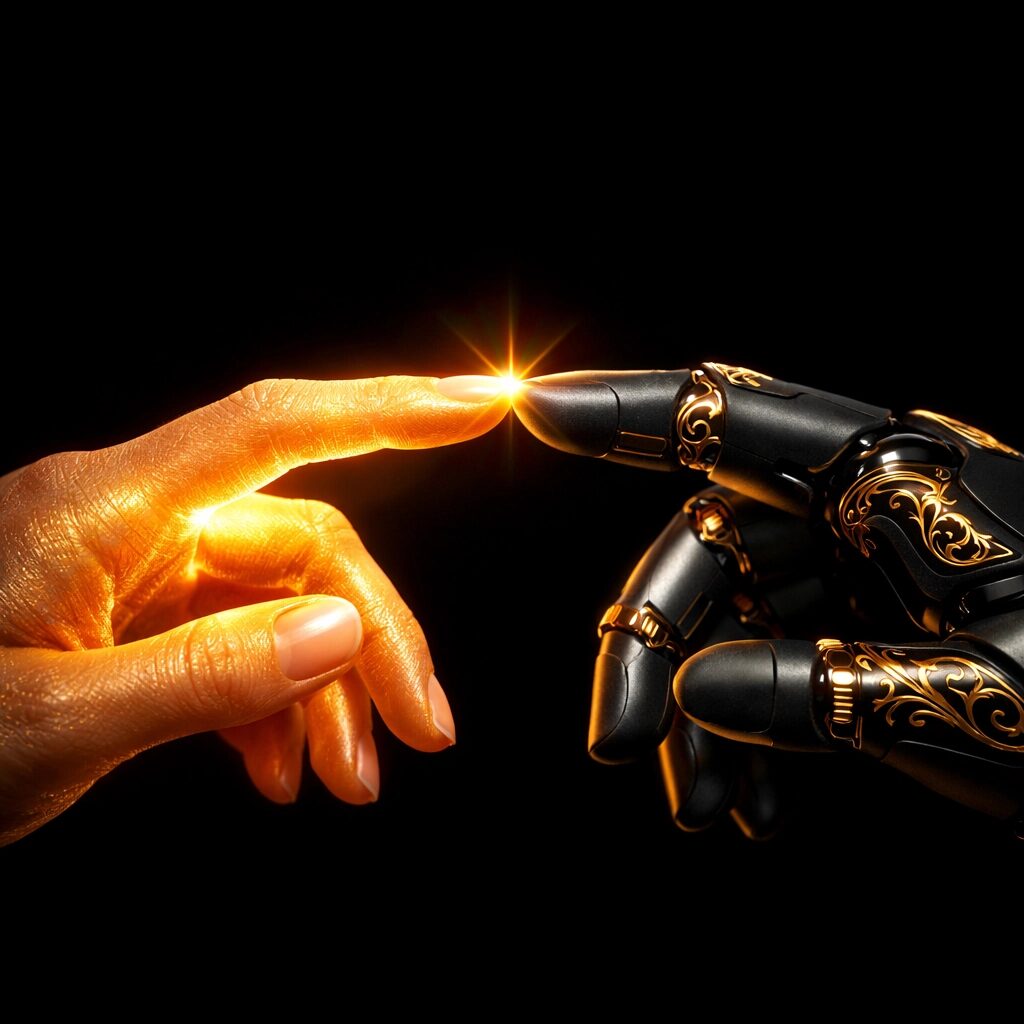
The Calm Automation Rule
To make this simple, I use a binary rule. It’s my “North Star” when I’m tempted to buy a new piece of shiny tech.
- If it needs empathy → keep it human.
- If it needs consistency → automate it.
Consistency is where humans fail. We get tired. We get distracted by the 8:07 am kitchen negotiations. We forget to send the invoice on a Friday afternoon because we’re desperate for a glass of wine and a quiet room. Machines don’t get tired. They love consistency. They thrive on doing the same thing at the same time, every single time.
On the flip side, machines are terrible at empathy. They can mimic the words, but they can’t feel the weight of them. If you’re stuck on where to start with this balance, check out our Calm AI Quick Start Guide to see how to integrate tools without losing your touch.
How This Reduces Overwhelm
When you finally nail the balance of what should you automate in your business, something magical happens. The “mental load”: that heavy, invisible backpack of “to-dos” you carry everywhere: starts to lighten.
You make fewer decisions. Instead of deciding to send an invoice, the system just does it. Instead of deciding to remind a client of a meeting, the system just does it. This clears space in your brain for the big stuff. It creates a calm operational layer that sits beneath your daily life, catching the balls you used to drop.
This is the path to the 10-hour working week philosophy. It’s not about doing less; it’s about doing the right things and letting technology handle the rest.
If you’ve ever felt like your business is a runaway carriage and you’re just clinging to the reins, it’s time to look at your systems. Are you trying to be the engine AND the driver?
Start small. Pick one repetitive task today: maybe it’s your lead nurture automation: and hand it over to a system. Then, take that saved time and use it to have a human conversation, go for a walk, or just sit in the quiet for five minutes.
You don’t need a heavier business. You need a lighter one. And that starts with knowing what should you automate in your business, and having the courage to keep the rest beautifully, messily human.