
If you’ve been feeling like every time you open Instagram you want to hurl your phone into the nearest pond, you’re likely experiencing visibility burnout for women in business. Let’s get one thing straight: you are not lazy. The exhaustion you’re carrying isn’t because you lack discipline or “don’t want it enough”; it’s because visibility burnout for women in business is actually a symptom of massive operational overload. When your business lacks the backend structures to support your front-end presence, visibility burnout for women in business becomes inevitable. You don’t need more grit; you need calm systems.
The other morning, I popped into the garden centre. It was meant to be a surgical strike: three minutes to grab a few sweetcorn plants. I left forty-five minutes later with a full small-holding’s worth of seedlings, three bags of organic compost, and a slightly confused expression. As spring finally starts to arrive, the pull to be outdoors is visceral. But for many women entrepreneurs, that pull is met with a sharp tether of guilt. You’re standing in the sun, smelling the damp earth, and a voice in your head whispers: “You haven’t posted a Reel in four days. Your engagement is going to tank. The algorithm will forget you exist.”
That is not a way to live. And more importantly, it is not a sustainable way to run a business.
Why Visibility Feels Heavier Than It Used To
It’s not just your imagination: showing up online feels significantly heavier than it did a few years ago. We are living in an “always-on” culture that demands a constant, polished online presence. It’s no longer enough to be good at what you do; you’re expected to be a director, an editor, a copywriter, and a charismatic lead actress all at once.
The emotional labour of visibility is the hidden tax nobody talks about. Every time you “show your face,” you’re navigating a minefield of self-judgment and social expectation. You’re checking the lighting, wondering if your background looks professional enough (or “authentic” enough: which is a whole different type of performance), and trying to condense years of expertise into a seven-second hook.
This constant pressure to perform leads to a specific kind of soul-fatigue. When your business relies on you being “on” 24/7, you aren’t a business owner; you’re a 24-hour news cycle. This is why The Visibility Blueprint is focused on strategy, not just “more.”

The Invisible Operational Load Women Are Carrying
The reason visibility burnout for women in business hits us so hard is that our “visibility” doesn’t exist in a vacuum. It sits on top of a mountain of invisible labour.
You aren’t just thinking about your content calendar. You’re tracking the laundry levels, remembering that it’s “Fruit Snack Friday” at school, wondering if the 1700kg horse in the field has a slightly “off” gait, and negotiating the exact time the dinner must be on the table to avoid a collective household meltdown.
In business, we have the same “laundry.” It’s the mental tracking of leads, the decision fatigue of choosing which platform to prioritise, and the cognitive overload of managing a dozen different tabs in your brain at once. By the time you sit down to “just write a post,” your brain is already at 2% battery.
We call this Invisible Work, and it is the primary reason why visibility feels like an uphill struggle in a gale-force wind. Your brain isn’t broken; it’s just overfull.
Why “Just Be Consistent” Isn’t Helpful Advice
If I hear the phrase “consistency is key” one more time, I might actually scream into a beehive.
For many women, “just be consistent” translates to “ignore your nervous system and push through the exhaustion.” It’s a shame-based messaging tactic that treats your human needs as an inconvenience to the algorithm. When you can’t maintain that level of output, the shame spiral begins. You feel inconsistent, so you retreat. Because you’ve retreated, the task feels even bigger when you try to come back.
It’s not inconsistency; it’s an overloaded nervous system trying to protect you.
When you’re juggling a household, perhaps a few animals (like my recent swarm collection calls: beekeeping waits for no content plan), and a growing business, your capacity fluctuates. A rigid “consistency” model doesn’t account for real life. It doesn’t account for the days when the power goes out for four hours or the days when the spring sun is just too beautiful to ignore.

Calm Systems Reduce Visibility Burnout
The antidote to visibility burnout isn’t “trying harder.” It’s building calm systems that do the heavy lifting for you. This is where AI Alchemy lives. We believe that technology shouldn’t make you more “robotic”: it should make you more human by freeing up your time.
Here is how we systemise the “heaviness” out of visibility:
- AI-Assisted Drafting: Stop staring at a blinking cursor. Use AI to turn a 3-minute voice note (recorded while you’re walking the dog or checking the fences) into a week’s worth of posts. Our Instagram AI Quick Start Guide shows you exactly how to do this.
- Batching with Intention: Instead of “feeding the beast” daily, we create containers. Spend one morning a month in your “Content Lab” and then let the systems handle the delivery.
- Content Repurposing: One great thought should live in ten different places. If you said something brilliant in a client call, that is your LinkedIn post, your newsletter, and your Reel script.
- Automation of Repetitive Tasks: Let the tech handle the “DMs” and the “link in bio” requests. This reduces the number of micro-decisions you have to make every day.
By implementing Calm Content Zero Chaos, you create a buffer between your life and your business. The systems hold the space so you don’t have to.

Visibility Should Support Your Life, Not Consume It
This week has been heavy on the bee front. I’ve had multiple calls for swarm collections: moments where nature basically says, “We’re moving, and we’re moving now.”
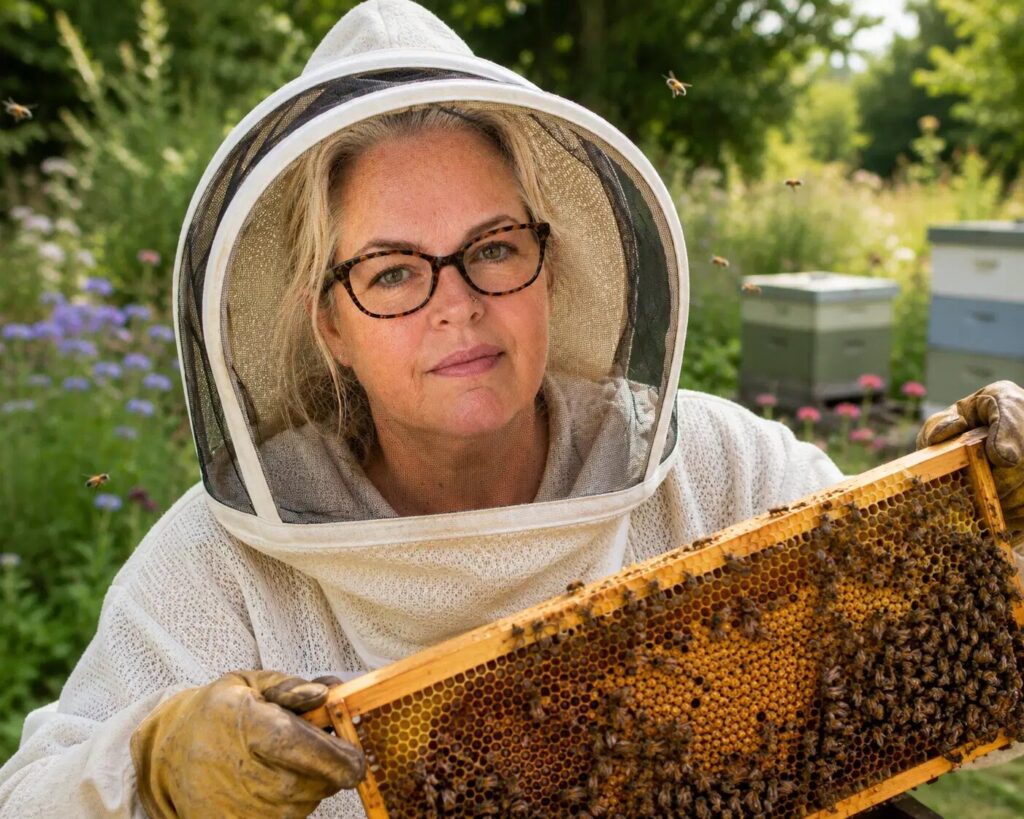
A honeybee colony is the ultimate calm system. It is a sustainable ecosystem where the workload is shared, the communication is precise, and the goal is the health of the whole hive. No single bee is trying to do everything. There is an intelligent operational structure that allows the hive to thrive, even in high-pressure moments.
Your business should run like a healthy hive. It should have support systems that work seamlessly in the background so that when a “swarm call” comes: or when the sweetcorn plants need to go in the ground: you can step away without the whole thing collapsing.
Sustainable visibility means showing up because you have something to say, not because you’re afraid of what happens if you don’t. It’s about making room for living again. It’s about being able to spend a Tuesday afternoon in the garden without checking your notifications every six minutes.
Making Room for Living Again
At the end of the day, AI Alchemy isn’t really about the tech. It’s about the freedom that tech provides. It’s about the fact that your business should be a support structure for your life, not the other way around.
If you’re ready to trade the “always-on” anxiety for a system that actually respects your humanity, we should talk. Whether it’s through our Conversations Into Clients guide or deep-diving into your Lead Nurture Automation, the goal is always the same:
More room for the garden. More room for the bees. More room for you.
Visibility doesn’t have to be exhausting. When the systems are calm, you can be too. Now, if you’ll excuse me, I have some sweetcorn that isn’t going to plant itself.